

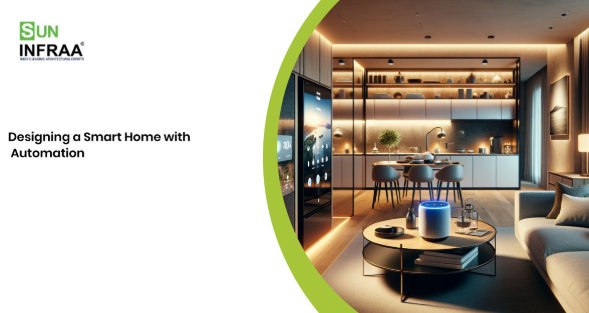
Creating a Smart Home that is Automated
What a Smart Home is all About.
Most people think of high-cost devices, voice assistants, or sci-fi houses when they think of smart homes because those seem to be more like a museum of technology than a home. As a matter of fact, smart homes do not deal with technological displays. It has to do with simplifying, optimizing, and streamlining the daily routine and making it comfortable with intelligent automation.
An effective smart home operates silently. You do not always think about it, it is just a good companion to your habits.
Begin With Living, Not Gadgets.
The greatest error that should be made when designing a smart home is purchasing gadgets and then trying to figure out what to do with them. The process of automation needs to start with the ways you live. When do you wake up? When do you leave home? Which rooms do you use most? What frustrates you daily?
Smart lighting that can be automatically adjusted is something the biggest difference to some people. To others, it is climate control, security or energy management. A standard smart home solution does not exist. Personal and purposeful systems are the best.
Automation Vaults Before Infrastructure.
The smart home requires a stable infrastructure. Internet connectivity should be stable, good Wi-Fi coverage, as well as adequate electrical planning, is a must. Low connectivity makes automation irritating.
When planning a home design or a house renovation, this is where power routes, extra conduits, power points and network access should be planned. Although you might not install all those smart features today, the infrastructure is ready and thus, it can be easily upgraded in future without disrupting any walls.
Automation needs to be natural.
Automation should aim at minimizing the manual effort, rather than increasing complexity. The smart systems are expected to react instinctively. When you walk into a room, lights come on, when you leave, they dim down, when the weather is cold, the temperature regulates itself, or the sun rays change the room curtains all add to it being more comfortable and not having to interact with it all the time.
Voice control is helpful, and it cannot be compulsory. Manual switches are still expected to work. Even in occasions when the internet is off or when one that is not familiar is utilizing the space, a smart home should be functional.
Energy is Security and Vice Versa.
Enhanced security is one of the best smart home advantages which can be used in practice. Smart locks, motion sensors, cameras and door sensors are useful in keeping an eye on the home even when you are not there. However, security is not only about surveillance, but it is about consciousness.
Another key benefit is energy efficiency. The smart systems can minimize useless power consumption by switching off appliances, lights or air conditioning when people are not inside the rooms. This will save on energy costs in the long run without compromising comfort.
Avoid Over-Automation
Additional automation does not necessarily imply the improvement of life. Over-automation of homes is claustrophobic or exasperating in cases where machines turn moody. Choice should not be eliminated but assisted with automation.
The most intelligent homes can be overridden manually, and adjusted gradually. Start small. Live with the system. Know what really makes your daily routine better and then you may order more.
Prepare to Live, Not to live Fashions.
Homes exist for decades but technology changes rapidly. In the design of smart homes, it is more flexible than pursuing the most recent devices. Select systems that have the capability of being used across a variety of platforms and which may be upgraded as they become necessary.
Do not lock your home to one proprietary system just because you are sure that it will be supported in the long run.
Final Thought
A smart home can work when it is relaxing, receptive and dependable. The home becomes more comfortable to live in when automation is in line with human behaviour instead of adapting to technological change. The intelligent houses are the ones that listen to the people in them without demanding elaborate mechanisms to do so.

 Architecture